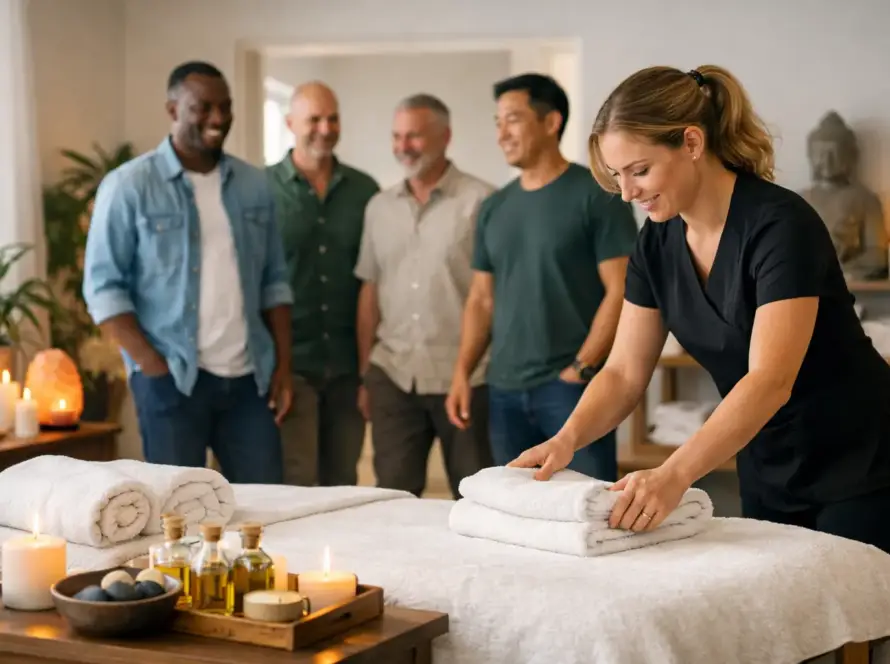
A man can carry tension for years without anyone noticing. It may sit in his shoulders after long working days, in a clenched jaw, or in the quiet feeling that he has to keep part of himself hidden. Asking, “is male to male massage normal?” is often about more than massage. It can be a question about permission: permission to receive care, enjoy comforting touch and be fully at ease with another man.
The simple answer is yes. Male-to-male massage is entirely normal, and it is chosen by men of every age, background and sexuality. Some want focused relief from muscular discomfort; others want to slow down, feel cared for and take a break from the pressure to always be composed. A professional massage can provide all of this without becoming sexual.
Is male to male massage normal for straight, bi and gay men?
Yes. The gender of a therapist does not define a client’s sexuality, identity or intentions. A straight man may feel more comfortable with a male therapist because of shared physical understanding, a preference for firmer pressure or simply personal ease. A gay, bisexual or bi-curious man may value the affirming comfort of being treated with warmth by another man. Neither experience needs defending.
Massage is a form of wellbeing, not a test of who you are attracted to. Receiving respectful, consensual touch can feel especially meaningful when you are used to limiting affection or keeping your needs private. There is no requirement to label yourself before booking a treatment. You are allowed to choose the environment in which you feel safest and most relaxed.
For some men, that environment includes a therapist who understands that softness, sensuality and masculinity can comfortably exist together. Enjoying calming oils, a slower pace, gentle touch or a nurturing atmosphere does not make you less masculine. It simply means you know what helps you unwind.
Sensual does not have to mean sexual
This distinction matters. Sensual massage is concerned with the senses: warmth, soothing pressure, calming music, skin-safe oils, unhurried attention and the feeling of being able to let go. It can be deeply relaxing and emotionally comforting because the body responds to safe, considerate touch.
A professional non-sexual massage has clear boundaries. The therapist explains what the session involves, checks in about pressure and comfort, and respects areas you would rather not have touched. Intimate areas are not included. Consent is ongoing, not a one-off question at the beginning. You can ask for an adjustment, decline a technique or stop the session at any point.
That clarity is not cold or clinical. In fact, it is what allows genuine relaxation. When the boundaries are understood, you do not have to second-guess the situation or perform a role. You can settle into the treatment knowing you are being respected.
Why the question can feel difficult to ask
Many men have been taught, directly or indirectly, to be wary of tenderness from other men. They may have heard that touch must be jokey, competitive or reserved for romantic relationships. If they are curious about a male therapist, enjoy male company, practise naturism, wear lingerie or explore a more feminine side, they may worry about being judged.
Those worries are understandable, but they do not mean there is anything wrong with the desire for comfort. Wanting a private, reassuring space can be a healthy response to stress, loneliness or the simple need to feel accepted. Massage is not therapy, and it should not be presented as a replacement for mental health support when that is needed. Yet a calm, consent-led treatment can support emotional wellbeing by giving the nervous system a chance to settle.
The right setting makes a real difference. Discretion, clean professional standards and a therapist who speaks plainly about boundaries are not small details. They are the foundation of trust, particularly when a client is sharing a vulnerable part of himself.
What a comfortable male-to-male massage should feel like
There is no single ideal massage. One man may want a traditional Swedish-style treatment to ease tight muscles; another may prefer a slower, more sensory approach that helps him feel grounded in his body. The common thread should be your comfort.
Before the session, a good therapist will give you space to discuss practical preferences. That may include pressure, areas of tension, injuries, draping, whether you prefer conversation or quiet, and any personal boundaries. You do not need to give a long explanation for your choices. “Please avoid my feet,” “I would like light pressure,” or “I am a little nervous” is enough.
During the massage, you should never feel rushed, pressured or embarrassed. A professional therapist will not make assumptions about your sexuality or body. He will not treat an erection, nervousness or a moment of awkwardness as an invitation to cross a boundary. Bodies sometimes react involuntarily to warmth, relaxation and touch. The professional response is calm, respectful and matter-of-fact.
Afterwards, many clients describe feeling lighter, quieter and more present. That does not have to be dramatic. Sometimes the benefit is simply an hour in which nobody expected anything from you except honesty about what feels comfortable.
A note for naturists and men exploring self-expression
If you enjoy naturism, being comfortable with your body may make a massage feel particularly natural. But nudity is never an expectation or a measure of openness. Professional draping and clear agreements should always be available, and you decide what level of coverage helps you relax.
The same principle applies if you enjoy lingerie, crossdressing or feminine presentation. These interests deserve respect, not curiosity or judgement. Some men feel more at home when softness and femininity are welcomed as part of their self-expression. Others prefer a conventional massage setting. Both are valid, and a thoughtful therapist will discuss what is appropriate for a non-sexual treatment before the appointment.
Choosing a therapist with confidence
When you are looking for a male therapist, read beyond the word “massage”. The language a business uses can tell you whether it understands professionalism and emotional safety. Look for clear information about the type of massage offered, what is and is not included, privacy arrangements and how consent is handled.
It also helps to notice how you feel before you book. Do you feel reassured by the description, or do you feel pushed towards something unclear? Are your questions welcomed? Is the therapist willing to discuss boundaries without making you feel difficult? Trust that instinct. A treatment should begin with clarity, not uncertainty.
At Blissful Serenity Massage Therapies, the intention is to offer men a private, affirming place to relax, unwind and be themselves. Sessions are sensual in the sense of being attentive, soothing and personalised, while remaining firmly non-sexual. For clients in Guildford, Surrey, London and selected areas, that combination can offer a rare kind of ease: caring touch without judgement and professionalism without distance.
You do not need to earn the right to feel cared for
There can be a temptation to explain away the wish for male-to-male massage: perhaps it is only for sore muscles, only a one-off treat, only acceptable if nobody knows. But care does not need an excuse. You can book because your back aches, because you are exhausted, because you miss being touched kindly, or because you want an hour where you can breathe more freely.
Your comfort and boundaries remain yours throughout. Choose a therapist who respects both, arrive as yourself and let the experience be as simple as it needs to be: a safe, professional moment of rest in which you are welcomed without judgement.