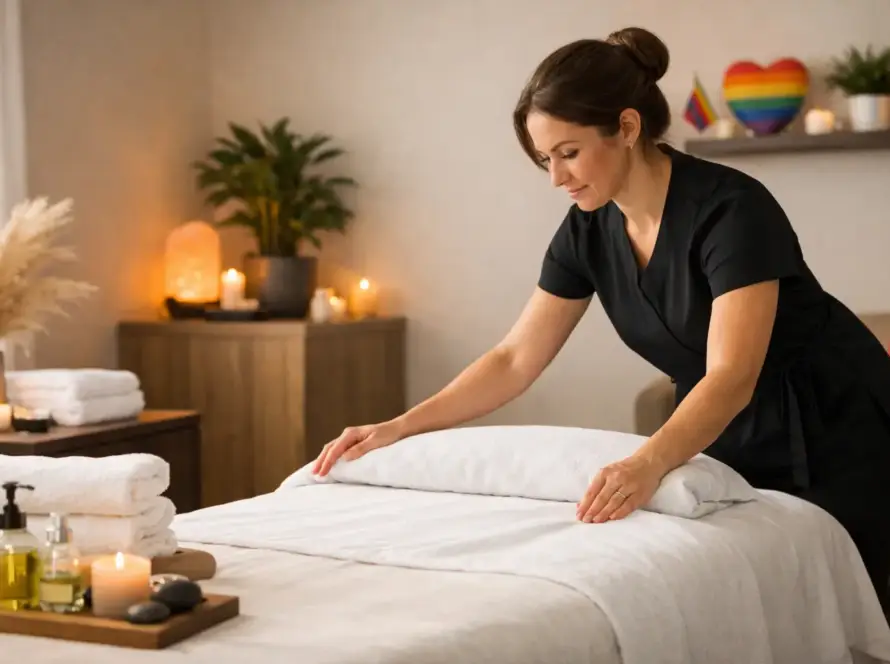
A search for a male therapist London can mean far more than finding someone with an available appointment. You may be looking for skilled massage, certainly, but also for a setting where you can let your guard down. Perhaps you want the reassuring presence of another man, a quieter kind of connection, or simply the freedom to be yourself without having to explain or edit who you are.
That is a very personal thing to seek. It deserves care, clear boundaries and a therapist who understands that feeling emotionally safe is part of feeling physically relaxed.
What are you hoping to feel after your massage?
Before comparing therapists, it can help to put the word “massage” to one side for a moment. Think about what you need from the experience. You may arrive carrying stress in your neck, shoulders and lower back after a demanding week. You may be feeling touch-starved, disconnected from your body, or in need of calm companionship in a private, professional setting.
For some men, the preference for a male therapist is practical. They feel more at ease with a male practitioner or prefer the pressure and style they associate with male hands. For others, it is more emotional. Gay, bisexual and bi-curious men may want to be welcomed without judgement. Men who enjoy naturism, lingerie, crossdressing or a softer, more feminine presentation may want a space where that part of themselves is treated with warmth and respect rather than curiosity or embarrassment.
There is no need to justify any of this. The right therapist will listen to what helps you relax and will be honest about what they can offer.
A male therapist in London should make boundaries clear
A massage can be sensual without being sexual. This distinction matters, especially when you are choosing a private treatment and placing trust in someone you do not yet know.
Sensual massage may involve unhurried, attentive touch, warming oils, a peaceful atmosphere and an awareness that relaxation is about the whole person, not only tight muscles. It can feel nurturing, intimate in the human sense and deeply comforting. Yet it must remain within clear professional boundaries at all times. There should be no pressure, no assumptions and no ambiguity about the nature of the session.
A trustworthy therapist states this plainly before you book. They explain that the massage is strictly non-sexual, respect agreed areas of the body and make it clear that you can ask for an adjustment or stop at any point. This is not cold or restrictive. In fact, well-held boundaries often make it easier to relax because you know exactly where you stand.
Be cautious if a provider is vague when you ask what is included, avoids discussing boundaries, or makes you feel that your comfort is secondary to their preferred style. A professional response should be calm, direct and free from judgement.
Consent is ongoing, not a formality
Your first conversation should give you a sense of how you will be treated in the room. A good therapist may ask about injuries, health considerations, pressure preferences and areas you would rather avoid. They should also ask how you would like to be draped and whether you are comfortable with the proposed style of massage.
Consent is not a single question at the beginning. It continues throughout the treatment. You are allowed to say that the pressure is too firm, that you would like more focus on your back, that you need a pause, or that something simply does not feel right. You do not need a perfect reason.
Privacy is part of the treatment
London life can leave very little room to be unobserved. You may share a home, work in a busy office, travel on packed trains and spend much of your day responding to other people’s needs. A private massage appointment can offer a rare chance to switch off.
Discretion should be visible in the practical details. Ask how bookings are arranged, whether the location is private and what you can expect on arrival. If you choose a mobile appointment, discuss the space required and how the therapist will maintain a calm, professional environment in your home, hotel or other suitable private setting.
You should never feel hurried into sharing more personal information than is needed for your comfort and safety. Equally, if you do wish to discuss your preferences – whether that includes naturism, body confidence or feminine self-expression – you should be met with uncomplicated acceptance.
At Blissful Serenity Massage Therapies, the focus is on creating that sense of privacy and emotional ease alongside personalised Swedish and tantra-style relaxation massage. The approach is sensual and affirming, while remaining explicitly non-sexual.
Choose the style that suits your body and mood
Not every massage is meant to achieve the same thing. If your body feels knotted and overworked, you may prefer more traditional Swedish techniques, with measured pressure to ease tension and encourage circulation. If you feel mentally overloaded or detached from your body, a slower, more mindful style may be the better fit.
Tantra-inspired massage is often misunderstood. In a professional, non-sexual context, it is about breath, presence, relaxation and a more connected awareness of the body. It can be especially appealing if you want to move beyond a quick, functional treatment and allow yourself time to settle. It is not a promise of sexual contact, and a reputable provider will never present it as one.
The best option depends on you. Tell the therapist if you prefer silence, gentle conversation, lighter pressure or a longer period of relaxation at the end. Personalisation should not be an expensive extra. It is central to a massage that genuinely helps you unwind.
You can ask about presentation and atmosphere
For some clients, the atmosphere is as meaningful as the technique. Soft lighting, warm towels, quality oils and unhurried pacing can make a profound difference to how safe and cared for you feel.
You may also feel particularly comfortable with a therapist whose presentation includes a gentle feminine touch, such as optional women’s lingerie. This is not for everyone, and it does not need to be. What matters is being able to state your preference without shame and receiving a clear answer about what is possible. The experience should always be shaped by mutual comfort, professionalism and respect.
Questions worth asking before you book
A brief, honest exchange can save you from an awkward or unsuitable appointment. You might ask whether the massage is strictly non-sexual, what draping is used, how long the hands-on treatment lasts and whether the therapist has experience working with clients who are nervous or new to male massage.
It is also reasonable to ask about the treatment location, mobile availability and how much notice is needed. If you are booking in London, travel time and privacy can affect what will work best. A therapist who communicates clearly before the session is more likely to make the practical side feel straightforward on the day.
Listen to your own reaction to the reply. You are looking for more than a technically correct answer. You are looking for warmth without pressure, confidence without bravado, and a genuine willingness to respect your boundaries.
Let yourself be a beginner
You do not need previous massage experience to book a male therapist. Many people worry about what to wear, whether their body will be judged, how relaxed they are supposed to be, or whether they will know what to say. The answer is simple: you only need to arrive as you are.
A considerate therapist will guide the practicalities, explain what happens next and give you time to settle. You may relax immediately, or it may take twenty minutes before your shoulders begin to drop. Both are normal. Your body has its own pace, particularly if you are used to staying alert or hiding parts of yourself.
The most valuable massage is not necessarily the one that feels most elaborate. It is the one that leaves you feeling respected, calmer in your own skin and able to breathe a little more freely. Give yourself permission to choose that kind of care.