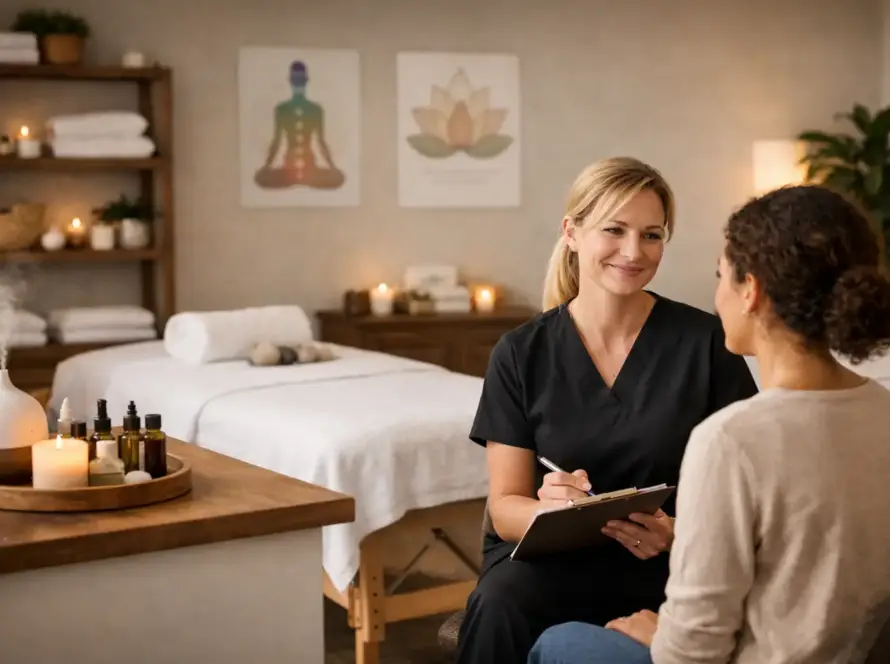
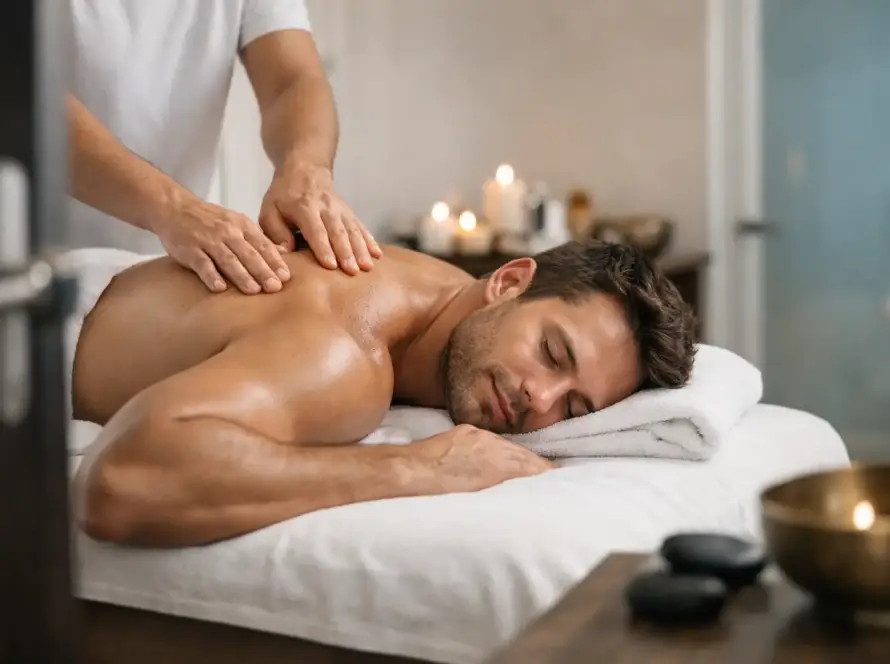
A massage should not begin with you wondering whether you are allowed to speak up. Knowing how to discuss massage boundaries comfortably means you can arrive feeling less guarded, ask for what helps you relax, and enjoy touch that feels right for you. In a private, sensual but strictly non-sexual setting, that clarity is not awkward or demanding. It is part of creating the calm, affirming experience you came for.
For many men, saying what they need can feel unexpectedly vulnerable. Perhaps you are trying massage with a male therapist for the first time. Perhaps you enjoy naturism, are exploring a softer or more feminine side of yourself, or simply want warm, attentive touch without assumptions. You deserve to be welcomed without judgement and to remain fully in control of your own comfort.
Why boundaries make a massage more relaxing
Boundaries are sometimes mistaken for rules that spoil spontaneity. In fact, they do the opposite. They remove the need to second-guess what will happen next. When you and your therapist understand what is welcome, what is off limits, and what you would prefer to decide as the session unfolds, your body has more permission to settle.
A professional massage boundary is not only about areas of the body. It can include pressure, pace, conversation, music, draping, temperature, whether you prefer quiet, and how you would like to be addressed. If feminine presentation, lingerie, nudity or a naturist environment is part of what helps you feel comfortable and affirmed, it is also reasonable to ask how this is handled before booking.
There is no need to justify any preference with a long explanation. “I am more comfortable with a towel covering me,” “Please avoid my stomach,” or “I would like a quiet session” is enough. The right therapist will hear the request as useful information, not a problem.
How to discuss massage boundaries comfortably before booking
The easiest time to raise concerns is before you arrive. A short message gives you privacy and lets the therapist answer clearly, without you having to find the words while you are already on the massage table.
Start with the practical point you most need to know. You might ask whether the massage is strictly non-sexual, what level of undress is expected, whether draping is available, or whether a particular area can be avoided. If you are new to sensual massage, it can help to say that too. A considerate therapist can explain the format, the limits of the session, and what you can expect without making you feel inexperienced.
You may also want to be direct about what you are looking for emotionally. For example: “I am looking for relaxation and affirming touch, but I am a little nervous,” or “I would like a calm, discreet space where I can be myself.” This does not have to become an intensely personal conversation. It simply helps set the tone.
Pay attention to the reply. Clear, respectful answers are a good sign. You should not feel pressured to share intimate details, persuaded to accept something you have not requested, or left uncertain about whether the service is sexual. Professional reassurance is specific: the therapist should be able to explain what they offer and where the boundaries sit.
Questions that can give you peace of mind
If you are unsure what to ask, focus on the details that affect your ability to relax. You could ask how consent is checked during the session, whether you can request changes at any point, how draping works, and what happens if you become uncomfortable. For mobile massage, you can also ask what room set-up is needed and how privacy is maintained.
Men travelling to naturist destinations such as Studland, the Bournemouth and Poole area, Vault Beach, or Cap d’Agde may have additional questions about modesty and setting. A naturist preference does not mean you have agreed to every kind of touch. The same clear consent and strictly non-sexual boundaries apply wherever the massage takes place.
Say what you need at the start of the session
The first few minutes are there for more than choosing a massage oil. This is your opportunity to settle into the space and confirm the plan in plain language. A good therapist will invite this conversation rather than rush past it.
Try describing preferences rather than apologising for them. “I enjoy firm pressure on my shoulders, but lighter touch on my legs” is clear. “Please check with me before working near my chest” is clear too. If you would rather not talk throughout the massage, say so. If gentle conversation helps you feel at ease, that is equally valid.
It can be useful to agree on a simple way to pause. You might say, “If I say stop, please stop straight away,” although that should already be understood. Some clients prefer a less formal phrase such as “Can we change that?” The words matter less than knowing that you can use them without embarrassment.
If clothing, underwear, a towel, or feminine presentation is part of the experience, discuss it openly before the massage begins. Your comfort may be different from another client’s. There is no standard you need to live up to, and no expectation to reveal more of your body than you want to.
Boundaries can change during a massage
Consent is ongoing, not a one-off question asked at the door. A touch that sounded lovely in theory may feel too intense once you are lying down. You may realise that you are colder than expected, that an area feels tender, or that you would prefer more space. Changing your mind is completely allowed.
Small requests are often enough: “A little lighter, please.” “Could you move on from there?” “I would like the towel adjusted.” You do not need to wait until you are deeply uncomfortable. Speaking early protects your relaxation and gives the therapist a chance to respond straight away.
Sometimes a client worries that stopping or redirecting touch will seem rude. It will not. Massage is personal, and bodies communicate differently from day to day. A professional therapist would rather adjust immediately than have you endure something that does not feel right.
Physical responses can also happen when someone is warm, relaxed, receiving close attention, or feeling emotionally safe. They do not change the agreed nature of a non-sexual massage. There is no need for shame, and there is no need to turn the moment into a discussion unless you want reassurance. Professional boundaries remain in place, with calm, respectful handling from both sides.
What firm professional boundaries should feel like
Warmth and sensuality do not require uncertainty. The most reassuring sessions often have the clearest frame: agreed touch, mutual respect, privacy, and a shared understanding that the massage is non-sexual.
Your therapist should not make sexual suggestions, test limits, or treat silence as permission. Equally, a client should respect the therapist’s stated limits and the agreed service. This mutual care is what makes an intimate-feeling treatment emotionally safe rather than confusing.
At Blissful Serenity Massage Therapies, the intention is to offer men a discreet space to relax, unwind and be themselves, including those who want gentle affirmation around naturism or feminine self-expression. The service remains firmly non-sexual, because that clarity allows tenderness, body positivity and genuine rest to exist without pressure.
A few words are enough
You do not need perfect language or complete confidence to ask for what you need. One honest sentence before your session can make a meaningful difference: “I am nervous, so I may need to guide you as we go.” That is not a failing. It is a thoughtful way of caring for your comfort and emotional well-being.
The right massage experience leaves you feeling calmer in your body, not less certain of your boundaries. Give yourself permission to speak, pause, adjust and simply be yourself. The therapist’s job is to make room for that.