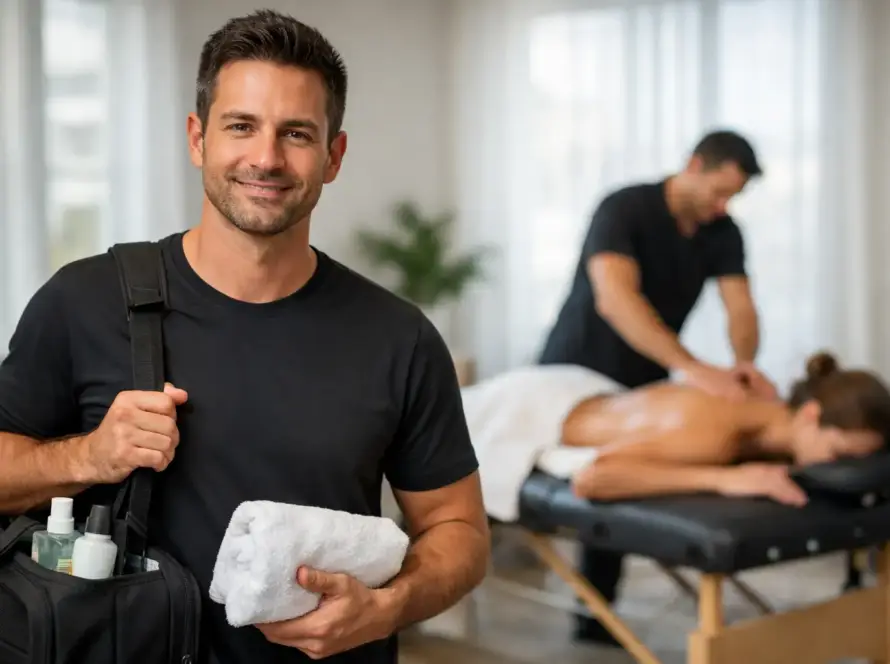
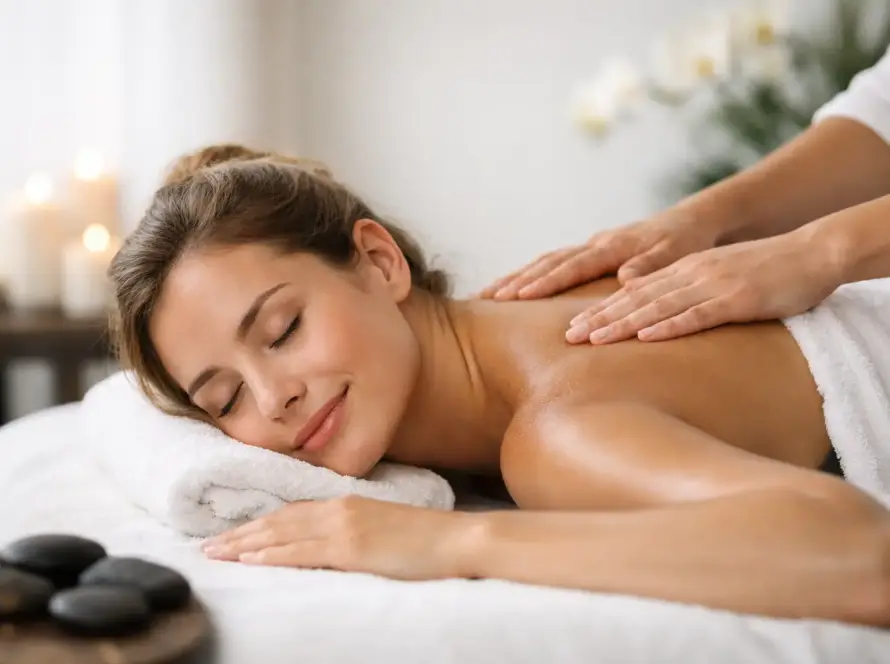
A treatment room can look beautiful and still leave you feeling slightly on display. That difference sits at the heart of private massage vs spa treatment. Both can ease tense shoulders, quiet a busy mind and offer valuable time away from daily demands. Yet the setting, level of personal attention and emotional comfort can feel very different – especially if you want to relax, be yourself and know your boundaries will be understood.
For some men, a spa is exactly right: polished, sociable and full of facilities. For others, the calm of a one-to-one massage feels more restorative because there is no need to perform, explain yourself or fit into somebody else’s idea of wellness. Neither choice is inherently better. The right one is the one that lets your body and mind settle.
Private Massage vs Spa Treatment: The Real Difference
A spa treatment is usually part of a wider wellness environment. You may arrive at a reception desk, change in a communal area, share lounges or thermal facilities with other guests, and choose from a set menu of treatments. This can be a lovely experience when you want a day out, perhaps with a partner or friends, and enjoy the sense of occasion.
Private massage centres on the session itself and the person receiving it. The environment is quieter and more contained, whether that is a discreet studio, your own home or an agreed mobile location. There are no other guests passing by, no rush to move on to the next facility and no pressure to make conversation unless you want it.
That privacy matters for practical reasons, but it can matter emotionally too. Many men carry stress in more places than their neck or lower back. They may feel self-conscious about their body, uncertain about being touched, or simply exhausted by the need to stay guarded. A private setting can offer room to exhale.
Atmosphere: Shared Luxury or Personal Sanctuary?
Spas are designed around ambience at scale. Soft lighting, robes, scented products and pools can create a welcome break from ordinary life. However, even the finest spa has timetables, other visitors and a certain public rhythm. If you are uncomfortable in changing rooms, dislike busy relaxation areas or prefer not to be seen in a vulnerable state, those details can interrupt the benefit.
A private massage is more adaptable. You can arrive without navigating a crowded reception, take the time you need to settle and keep the focus on your comfort. The room is not a stage. It is a space where you can relax, unwind and be yourself without judgement.
For men who are gay, bisexual, bi-curious, exploring naturism or expressing a softer or more feminine side, that sense of being welcomed can be particularly meaningful. Mainstream wellness spaces are not necessarily unkind, but they are not always set up to acknowledge what helps each person feel safe. Private care can make room for those needs without turning them into a spectacle.
Personalisation Goes Beyond Massage Pressure
At a spa, a therapist will usually ask sensible questions about pressure, injuries and preferred areas. Treatments can still be excellent, but they often follow a standard format because appointments are tightly scheduled and the same menu must work for many guests.
With a private therapist, the conversation can be more individual. You may want a slow Swedish-style massage after a demanding week, a more sensory tantra-inspired approach focused on breath and relaxation, or simply unhurried, reassuring touch that helps you feel grounded in your body. The pace can be adjusted as the session develops rather than forced into a fixed routine.
Personalisation also includes the things that are easy to overlook. Some clients prefer gentle music; others prefer quiet. Some need a few minutes of conversation before they can switch off; others would rather say very little. You may wish to remain covered, partially uncovered or enjoy a naturist-friendly setting where that has been agreed in advance. Consent, comfort and clear communication should guide every choice.
For clients who enjoy feminine presentation, an optional lingerie or crossdressed presentation from the therapist may add a feeling of softness, familiarity or affirmation. It is a matter of personal preference, never an expectation. The purpose remains relaxation, emotional well-being and respectful human connection.
Boundaries Should Feel Clear, Not Awkward
One reason some people hesitate to book private massage is uncertainty about what the word “private” means. Privacy does not mean ambiguity. A professional private massage should be clear from the first enquiry about the type of treatment offered, what is and is not included, and how consent is handled.
At Blissful Serenity Massage Therapies, sensual massage is explicitly non-sexual. Sensual in this context means attentive, soothing and body-positive: a massage that recognises touch can be emotionally comforting as well as physically relaxing. It does not mean sexual services, sexual contact or blurred boundaries.
That clarity protects everyone. It allows you to relax because you know you will not be judged for wanting warmth, gentleness or a more affirming experience. It also creates a respectful framework in which you can state your limits, ask questions and change your mind at any point. The best treatment never asks you to tolerate discomfort to avoid seeming difficult.
When a Spa May Be the Better Choice
A spa can be the stronger option if the facilities are a large part of what you want. Perhaps you have a free afternoon and fancy a sauna, steam room, pool, facial and lunch as part of a full day of pampering. A hotel spa can also suit a couple or group who want to enjoy the same venue, even if treatments take place separately.
It may also feel more familiar if this is your first massage and you want the reassurance of a conventional setting. There is nothing wrong with choosing what feels known. You can always try a more private experience later if you find that the busy, structured atmosphere does not quite allow you to settle.
The trade-off is that a spa can be less flexible. Booking slots may be shorter, treatment menus more prescribed and the level of discretion lower simply because the space is shared. For some, that is irrelevant. For others, it is the whole point.
When Private Massage Is Likely to Suit You Better
Private massage may be a better fit if your priority is quiet, discretion and treatment shaped around you. This is often the case for men who feel more comfortable away from public changing areas or who want care from a male therapist in an accepting one-to-one setting.
It can also work well when travelling to you makes life easier. A home visit can remove the stress of getting across London after work, while a discreet studio session gives you a neutral space away from home. If you are holidaying near naturist locations such as Studland, Bournemouth, Poole, Vault Beach or Cap d’Agde, a private session can complement the slower, more body-positive rhythm of a break away.
The key question is not whether you “deserve” private care. You do. Ask instead what would help you let go most fully. If the answer is fewer people, more time, a warmer conversation and no need to hide parts of yourself, a private massage may offer something a spa treatment cannot.
What to Ask Before You Book
Whether you choose a spa or an independent therapist, a few direct questions can save uncertainty. Ask how long the hands-on massage lasts, what the setting is like, whether you can discuss areas to avoid, and how privacy is protected. If you have a health condition, injury or concern about touch, mention it before the appointment so the treatment can be approached safely.
For private massage, it is also reasonable to ask about professional boundaries, presentation options and what you should expect on arrival. A good therapist will answer calmly and plainly. You should not have to guess at the rules or feel embarrassed for wanting reassurance.
There is no single correct way to receive care. You may love the polished escape of a spa one month and want the quiet attention of a private session the next. Choose the setting where your shoulders drop, your breathing slows and you feel most able to be welcomed exactly as you are.