A mirror can turn a perfectly ordinary morning into a harsh internal inspection. Perhaps you notice your stomach before you notice that you slept well, or judge your legs before choosing clothes that feel comfortable. If you are wondering how to practise body neutrality, the starting point is simple: you do not have to adore every part of your body to treat yourself with respect.
For many men, body image is tied up with ideas about masculinity, fitness, ageing, sexuality and how much space they are allowed to take up. Add the vulnerability of being nude, enjoying sensual relaxation, wearing lingerie or exploring a softer, more feminine side, and self-criticism can become especially loud. Body neutrality offers a quieter, kinder alternative. It makes room for you to relax, unwind and be yourself without requiring constant body confidence.
What body neutrality actually means
Body neutrality is the practice of seeing your body as more than an object to assess. Rather than forcing yourself to say, “I love my body,” on a day when that feels untrue, you may say, “This is my body today, and it deserves care.” The focus shifts from appearance to function, comfort, sensation and personal dignity.
That does not mean ignoring difficult feelings. You may still wish you looked different, feel awkward in photographs or have days when getting changed feels exposing. Neutrality simply asks that you do not turn those feelings into punishment. Your body is not a project that must be completed before you are allowed rest, touch, connection or pleasure.
This approach can be particularly freeing if appearance-based compliments make you uneasy. You are allowed to value the way a warm shower settles your nervous system, the steadiness of your breathing, or the freedom of wearing something that helps you feel more like yourself. None of that depends on meeting a particular standard.
How to practise body neutrality in everyday moments
Body neutrality becomes useful when it is specific. It is less about repeating a perfect affirmation and more about changing the small habits that keep you in a cycle of checking, comparing and criticising.
Notice the language you use about yourself
Listen for automatic phrases such as “I look awful”, “I should not be seen like this”, or “I need to earn that meal”. These thoughts can be deeply familiar, but familiar does not mean fair. Try replacing them with words that are factual and less hostile: “I am feeling self-conscious today”, “My body has changed”, or “I do not need to comment on my appearance right now.”
This is not pretending you feel wonderful. It is choosing not to make a difficult moment worse. Speak to yourself as you would to a man you care about who had trusted you with something sensitive.
Reduce body checking where you can
There is a difference between using a mirror to get ready and repeatedly searching for flaws. Frequent weighing, pinching at skin, comparing photos, or changing outfits because you fear how you look can leave you more anxious, not more in control.
Experiment with gentle boundaries. Give yourself enough time to dress without rushing, then step away from the mirror. Choose clothes for softness, fit and how you want to move through the day. If you enjoy feminine clothing or lingerie, let the question be “Do I feel comfortable and expressed in this?” rather than “Will I look convincing enough?”
Bring attention back to sensation
Your body is not only visible. It is also the place where you experience warmth, music, a favourite meal, the coolness of clean sheets and the relief of stretching after a long day. Sensation can interrupt the habit of viewing yourself from the outside.
When you feel pulled into criticism, take a moment to name three neutral physical sensations. Your feet may feel supported by the floor. Your shoulders may be tense. The air may feel cool on your arms. This is a small grounding practice, but it can bring you back from judgment to the present.
Make movement an act of care, not correction
Movement can support body neutrality when it is not treated as a punishment for eating, resting or taking up space. A walk, swim, gym session, yoga class or dance around the kitchen can be about releasing stress, sleeping better or feeling capable in your body.
The right choice depends on your energy and health. Some days, a proper workout may feel satisfying. On others, rest may be what your body needs. Neutrality is not another set of rules to fail at. It is permission to respond rather than relentlessly push.
Body neutrality when nudity or self-expression feels vulnerable
Being nude, whether alone, with a partner, at a naturist setting or during a professional wellness treatment, can bring old insecurities sharply into focus. The same can be true when experimenting with lingerie, make-up or clothing that expresses femininity. Feeling exposed does not mean you are doing anything wrong.
Start at a pace that respects your comfort. You might spend a few minutes nude after a shower without analysing yourself, wear an item of clothing privately that feels affirming, or practise sitting with the sensation of being comfortable rather than visually “perfect”. If anxiety rises, cover up, pause and return another day. There is no prize for forcing yourself through discomfort.
It also helps to choose spaces where boundaries are clear. A respectful setting should never pressure you to disclose more, show more or feel more confident than you do. Your consent, privacy and emotional comfort matter. You are entitled to change your mind, ask for adjustments and be treated without judgement.
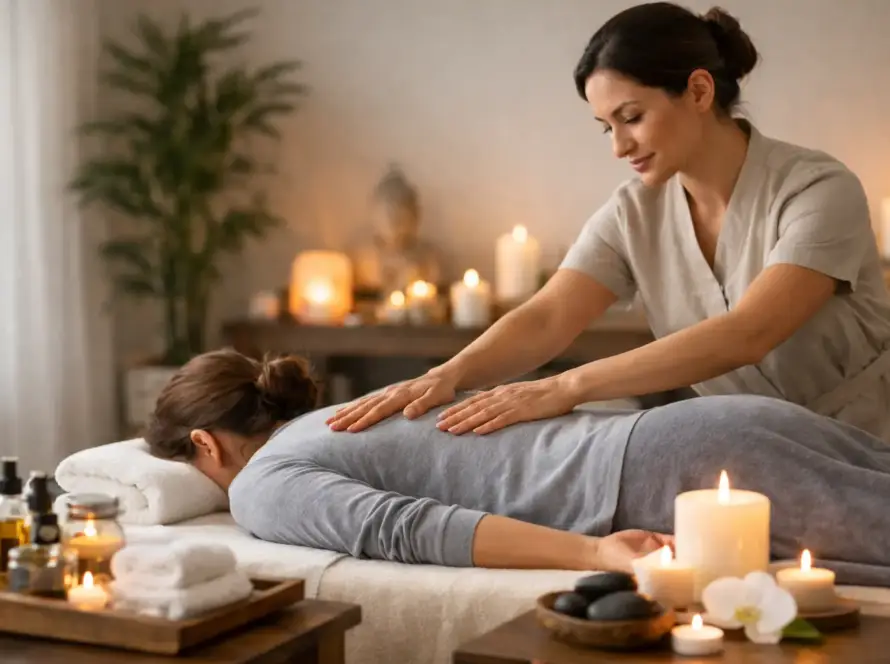
At Blissful Serenity Massage Therapies, the emphasis is on a private, professional and strictly non-sexual space where men can receive calming touch and be welcomed as themselves. For some clients, that sense of acceptance is as restorative as the massage itself. A good therapist will not expect you to perform confidence. They will listen to your preferences and help you feel at ease.
Let go of comparison, carefully
Comparison is difficult to avoid, especially online. Images are selected, posed, edited and often designed to create a reaction. Even when you know that intellectually, your nervous system may still respond with shame or inadequacy.
Consider what you are consuming after you scroll. Do certain accounts leave you feeling inspired, or do they leave you checking your reflection and withdrawing from life? Curating your feed is not oversensitivity. It is a practical form of self-respect. Seek out a broader range of bodies, ages, expressions and styles, especially if you have absorbed a narrow idea of what men are supposed to look like.
Comparison can also happen in social settings, gyms and dating spaces. When you catch it, return to your own experience. You do not need to be the leanest, most masculine, most feminine, youngest or most conventionally attractive person in the room to belong there.
When body neutrality feels hard
Some days, neutrality may feel beyond reach. If body thoughts are affecting your eating, sleep, relationships, work or willingness to leave the house, more support could be useful. Speaking with a qualified counsellor or therapist can offer a confidential place to understand where these beliefs came from and how to challenge them safely.
Be especially gentle if your body has changed through illness, injury, disability, medication, stress or ageing. You may be grieving a previous version of yourself. Neutrality does not demand that you rush past that grief. It allows you to acknowledge what is difficult while continuing to offer your body basic care and compassion.
You do not have to feel beautiful to deserve softness. You only need to remember that this body, in all its ordinary and changing reality, is the one carrying you through your life. Treating it with less hostility is a meaningful place to begin.