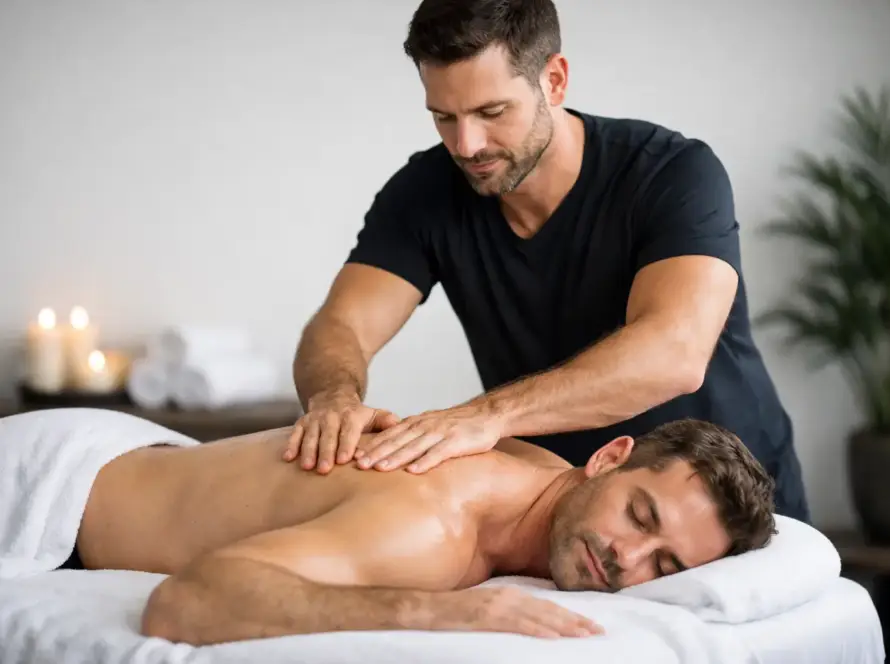
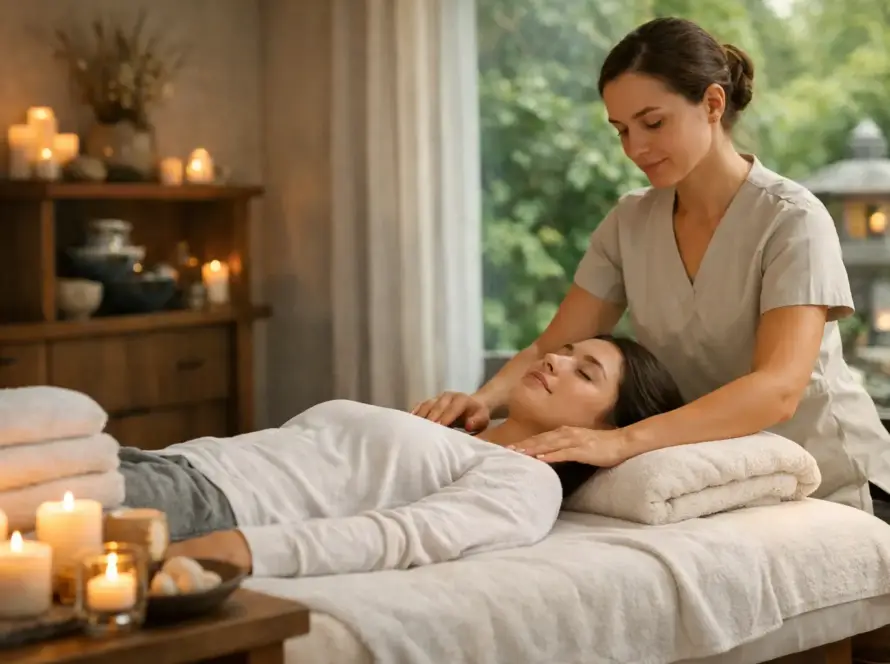
The quiet moments after a massage can be just as valuable as the session itself. This massage aftercare guide is here to help you hold on to that softer, more settled feeling, while giving your body the simple care it may need after focused touch and deep relaxation. There is nothing you need to perform or get right. Just notice what feels comfortable, take your time, and let the experience land.
For many men, a private massage is more than a break from a busy week. It can be a rare chance to unclench, receive nurturing touch, feel welcomed without judgement, and simply be yourself. Whether you have chosen a calming Swedish-style treatment, a slower sensual but strictly non-sexual experience, or a session that has helped you feel more at ease in your body, aftercare gives that intention a little more room to stay with you.
Massage aftercare guide: the first hour
When your massage ends, resist the temptation to rush straight back into errands, emails or a crowded train if you can. Sit for a few minutes, breathe normally, and allow yourself to come back into the room. Massage can leave you feeling wonderfully loose, sleepy, emotional, energised, or slightly spacey. All of these responses can be perfectly ordinary.
Drink some water when you are thirsty. You do not need to force down litres because you have had a massage, but gentle hydration is sensible, particularly if you have travelled, had a warm treatment room, or tend to forget to drink during the day. A glass of water, herbal tea or a soft drink is enough to begin with.
Choose comfortable clothes for the journey home. Soft fabrics and a relaxed waistband can feel particularly welcome when you are still enjoying the warmth and openness of the treatment. If you have attended in lingerie, femme clothing or simply in the way that feels most authentic to you, there is no need to explain your choices to anyone. Let comfort and privacy lead the way.
A light meal or snack can also help if you have not eaten for a while. Think of something uncomplicated and nourishing rather than a very heavy meal that leaves you sluggish. The aim is not a strict wellness routine. It is to be kind to yourself in practical, ordinary ways.
Let your body set the pace
Avoid a punishing gym session, a long run or heavy lifting immediately afterwards, especially if your muscles were already tight or the massage included deeper work. Your body has been invited to soften; demanding more from it straight away can feel jarring. Gentle movement is different. A relaxed walk, easy stretching, or moving around your home as normal can prevent you from feeling stiff.
It depends, of course, on the type of massage and how your body usually responds. Some people leave feeling ready to take on the world. Others feel as though they could happily curl up under a blanket and disappear for the evening. Neither response is better. The most helpful choice is to follow your energy rather than push against it.
If you have booked a mobile appointment, give yourself a small buffer afterwards before returning to family life, work calls or social plans. Even ten quiet minutes in the bathroom, bedroom or garden can make a difference. You deserve a little space to absorb the calm rather than snapping immediately into a role for someone else.
A warm shower is usually enough
A warm shower later in the day can feel soothing, particularly if massage oil remains on your skin. Keep the water comfortably warm rather than very hot, and pat yourself dry instead of rubbing vigorously if your muscles feel tender. If you prefer to keep the scent or softness of the oil on your skin for a while, that is fine too, provided it feels comfortable.
Skip very hot baths, steam rooms and saunas if you feel light-headed, overheated or unusually tired. Alcohol is also best kept modest on the day of your massage. A drink is a personal choice, but plenty of alcohol can make it harder to notice how tired or dehydrated you are, and it may dull the settled feeling you have just made space for.
The evening after your massage
The ideal evening after a session often looks pleasantly unremarkable: a simple meal, loose clothing, a favourite programme, a book, early night, or a little quiet music. You do not have to turn relaxation into another task to complete. Let the session be enough.
Sleep may come more easily, especially if stress has been sitting in your shoulders, jaw or lower back for weeks. If you can, make your bedroom a gentler place to arrive in. Fresh bedding, a cooler room, your mobile phone on charge across the room, or even just five minutes without scrolling can help preserve the slower rhythm you found during treatment.
Some clients also notice feelings coming to the surface after receiving caring, attentive touch. You might feel peaceful, unexpectedly emotional, affectionate, vulnerable, or reflective. This does not mean anything has gone wrong. Massage can create a pause long enough for feelings that were tucked away behind work, worry or loneliness to be noticed. Be gentle with yourself and do not feel pressured to label the feeling immediately.
What may feel normal the next day
Mild tenderness can happen after a massage, particularly around areas that were carrying tension. It should feel manageable and generally settle within a day or two. You may also feel more aware of a tight area than you did before, simply because you have spent time noticing your body.
Keep things simple: drink when thirsty, move gently, and use warmth or a cool pack if either feels soothing. There is no universal rule about which is best. Warmth often feels comforting for general stiffness, while a cool pack may be preferable if an area feels irritated or puffy. Use a cloth barrier and do not apply extremes of temperature directly to the skin.
You may find that your posture changes slightly after massage, or that you take a fuller breath without thinking about it. Notice those small shifts without chasing them. The goal is not to remain permanently floaty. It is to give your nervous system a reminder that ease is possible.
What to avoid after a massage
Most aftercare is common sense, but a few choices can make the day less comfortable. Try not to schedule intense exercise, a deep stretch class, or physically demanding work directly after treatment. Avoid lots of alcohol, prolonged overheating and anything that asks you to ignore fatigue.
Do not treat post-massage soreness as a challenge to work through. More pressure is not always more helpful, and another treatment is not automatically the answer if an area feels sensitive. Give your body time to respond. If you use pain relief or have an ongoing health condition, follow the advice already given by your pharmacist, GP or specialist rather than relying on general massage advice.
If you have had a treatment involving lots of oil, be mindful of slippery shower floors and take extra care when getting dressed. It is a small detail, but relaxed muscles and a steamy bathroom are not always the best combination.
When to seek medical advice
Massage should leave you feeling cared for, not alarmed. Contact a medical professional promptly if you experience severe or worsening pain, significant swelling, numbness, weakness, dizziness that does not pass, chest pain, trouble breathing, a rash, or any symptom that worries you. These are not typical after-effects to brush aside.
It is also wise to speak with your GP or relevant clinician before future massage appointments if you are managing a new injury, blood-clotting concerns, fever or infection, unexplained pain, recent surgery, or changes to medication. Being open about health needs helps your therapist adapt the session thoughtfully, or advise when massage should wait.
Carry the comfort into your next session
Aftercare also begins before your next booking. Make a mental note of what felt especially good: perhaps a slower pace, attention to your shoulders, quiet conversation, silence, the reassurance of clear boundaries, or the freedom to express a softer or more feminine side of yourself without judgement. That feedback makes a future session more personal.
At Blissful Serenity Massage Therapies, comfort, consent and discretion are never assumed. You are welcome to say what helped, what you would prefer differently, and what would help you relax more fully next time. Sensuality in this setting is about calm, warmth and connection to your own body, always within clear professional and strictly non-sexual boundaries.
Treat the hours after massage as permission to be a little less hard on yourself. A glass of water, an unhurried walk, clean sheets and a quieter evening may sound small, yet they can be a meaningful way of telling your body: you deserve care, and you are allowed to receive it.