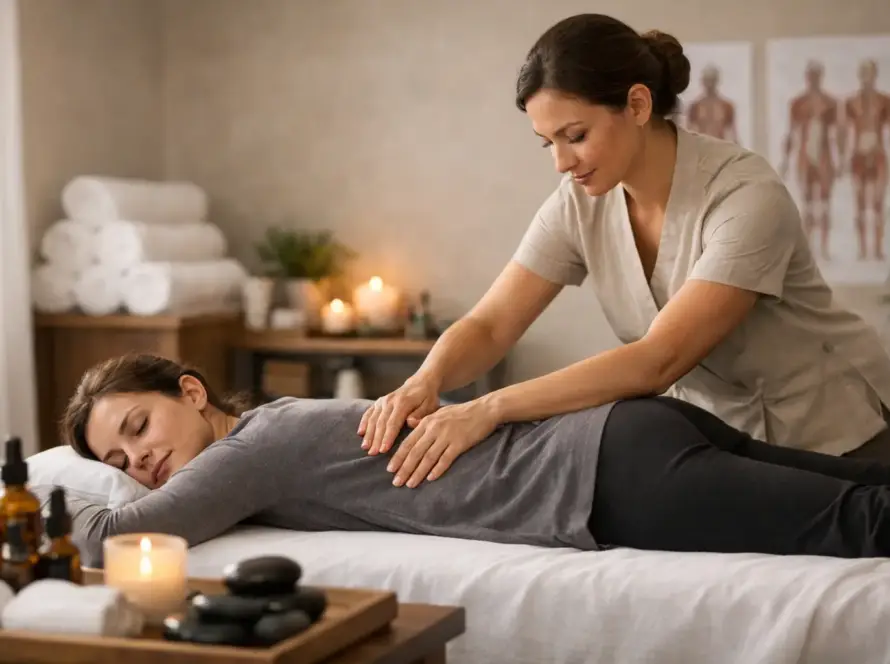
A massage can feel wonderfully calming, but it can also ask you to be more physically and emotionally open than you are used to. The best ways to feel comfortable during massage are not about forcing yourself to relax or pretending you have no nerves. They are about choosing an experience that feels safe, being clear about your needs, and allowing yourself to receive care at your own pace.
For many men, especially those seeking a more private, affirming experience, comfort begins before the first touch. You deserve to feel welcomed without judgement, whether you simply need stress relief, enjoy naturism, want gentle human connection, or wish to express a softer side of yourself.
Choose a setting that helps you exhale
The room matters. A massage is easier to settle into when you are not worrying about being overheard, rushed, observed or misunderstood. Look for a therapist and setting that clearly value privacy, discretion and professional boundaries.
A calm studio, a carefully prepared home visit or a private holiday setting can all work well. What matters is that you know what to expect: where the session will take place, how long it will last, what you need to provide, and how your privacy will be respected. When practical questions are answered upfront, your body has less reason to stay on alert.
If you are booking a mobile session, take a moment to prepare your own space. Put your mobile phone on silent, make the room comfortably warm, close curtains if that helps you feel protected, and allow enough time afterwards so you do not have to rush straight back into the day.
Tell your therapist what comfort means to you
Massage is personal. One client may want quiet from the moment the treatment begins, while another may relax more easily with gentle conversation and reassurance. Neither preference is difficult or unusual.
Before the session, share anything that will help you feel more at ease. This could include an old injury, an area you would prefer not to have massaged, your preferred pressure, or whether you would like the therapist to check in regularly. You can also say if you are new to massage, feeling nervous, body-conscious, or unsure how much clothing you would like to wear.
You do not need a perfect explanation. A simple sentence is enough: “I may need a little time to settle,” or “Please ask before moving to a new area.” A professional therapist will receive that information respectfully and adjust the session around you.
Comfort is not a one-off conversation
Your needs can change once the massage starts. Pressure that felt right on your shoulders may be too much on your calves. You might realise the room feels too warm, or that you would rather have silence. Speaking up is not interrupting the treatment. It is part of it.
Useful phrases can be short and direct: “A little lighter, please”, “Could you avoid that area?”, “I’m comfortable staying covered here”, or “Can we pause for a moment?” You remain in control throughout the session.
Wear as much or as little as feels right
There is no prize for being more exposed than you want to be. Some men are most comfortable receiving massage in underwear or shorts; others enjoy being nude, particularly if they are naturists or simply find clothing restrictive. Both choices are valid when they are made freely.
Professional draping should preserve warmth, modesty and a sense of security where appropriate. If you prefer a non-draped style in a private setting, this should be discussed clearly beforehand, with agreed boundaries and no assumptions. Nudity can be relaxing for some people, but it is never required for massage to be effective.
For clients exploring lingerie, crossdressing or feminine self-expression, the same principle applies: wear what makes you feel comfortable and authentic. Whether you arrive in everyday clothes, bring something special to change into, or prefer to keep things simple, you should not have to explain or defend your choices.
At Blissful Serenity Massage Therapies, clients are welcomed with tenderness and discretion, including men who appreciate a softer, more feminine atmosphere. The service remains strictly non-sexual, with clear boundaries that allow relaxation and self-expression to feel safe rather than uncertain.
Let go of the idea that your body must look a certain way
Body anxiety can make even a much-needed massage feel difficult. You may worry about your weight, body hair, scars, ageing, an erection caused by relaxation, or simply being seen up close. These worries are more common than many people admit.
A respectful therapist is focused on your comfort, wellbeing and the work of massage, not on judging your body. Bodies respond in all sorts of ordinary ways to warmth, touch and deep relaxation. If something leaves you feeling embarrassed or uneasy, you can ask to pause, change position, cover up, or move on. There is no need for shame.
Try to notice when your inner voice becomes critical. Rather than arguing with it, bring your attention back to a physical detail: the support beneath your back, the warmth of the room, or the slow release of your breath. You are allowed to take up space and receive care exactly as you are.
Understand the boundaries before you arrive
Clear boundaries create freedom. They mean you do not have to guess what is expected of you, what type of touch is included, or whether you will be pressured into anything that does not feel right.
A sensual, non-sexual massage may involve slow, attentive touch and a strong focus on comfort, relaxation and emotional wellbeing. It is not an erotic service, and it does not include sexual activity. That distinction should be stated calmly and plainly, not left ambiguous.
If you are drawn to massage because you miss affection, crave softness, or want to feel accepted by another man, those feelings are valid. A professional setting can hold them with care while keeping the experience respectful and safely bounded. In fact, many clients find that defined limits make it easier to relax, because there is no pressure to perform or respond in a particular way.
Give yourself permission to arrive slowly
Turning up flustered after a stressful journey can make it hard to settle. Where possible, arrive a few minutes early, use the loo, have some water, and give yourself a moment before the treatment begins. You do not need to become instantly serene.
During the first few minutes on the massage table, focus on a longer exhale. Let your shoulders drop without trying to make them drop. If your mind keeps returning to work, relationships or worries, that is normal. You can gently return to the feeling of your breath whenever you notice it.
Some people prefer a quiet room; others relax with soft music or a small amount of conversation. Ask for what genuinely helps rather than what you think a massage is supposed to look like. There is no single correct way to unwind.
Be honest if touch feels emotionally significant
Massage can bring up more than physical relief. A safe touch may highlight how long it has been since you felt cared for, accepted or able to rest. You might feel unexpectedly emotional, sleepy, chatty or quiet. None of these responses means you are doing anything wrong.
You are not required to share personal details, but you can say if you are feeling a little overwhelmed or vulnerable. A good therapist can respond with calm reassurance, adjust the pace, or simply give you more silence. The aim is comfort and emotional wellbeing, not an intense personal breakthrough.
This is especially relevant if you are trying massage for the first time after a difficult period, or if being touched by a male therapist feels new to you. Curiosity is enough. You do not need certainty before you book.
Keep the time after your massage gentle
Comfort does not end when the treatment finishes. Give yourself a few unhurried minutes to get dressed, drink water and notice how you feel. If possible, avoid scheduling something demanding immediately afterwards.
You may feel light, deeply relaxed or pleasantly tired. On occasion, a massage can leave you more aware of emotions you have been holding in. A warm shower, an early night, a quiet walk or simply a slower evening can help you stay connected to the sense of calm.
Most of all, remember that feeling comfortable is not something you have to earn. The right massage experience gives you room to relax, unwind and be yourself, with your privacy, choices and boundaries treated as part of your wellbeing from the very beginning.