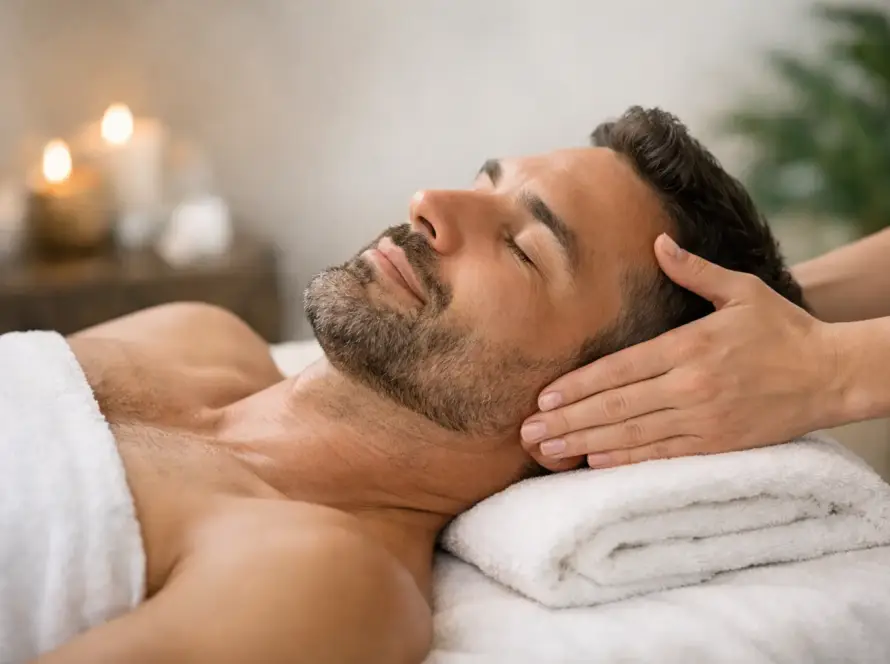
Some days, what feels most tiring is not a tight shoulder or aching back. It is the effort of holding yourself together: being composed, guarded, or unsure where you can simply be accepted. This guide to massage for emotional comfort is for men who want a calmer, more connected kind of relaxation – one that respects privacy, individuality and clear professional boundaries.
Massage cannot solve every emotional difficulty, nor should it replace medical or mental health support when that is needed. But safe, respectful touch can offer a welcome pause. It can help the body soften after prolonged stress, make room for rest, and remind you that comfort is something you are allowed to receive.
What emotional comfort in massage can mean
Emotional comfort is not about making a treatment overly intense or personal. It is about feeling at ease in your own skin while someone works with care, attentiveness and consent. For some men, that means a quiet room, unhurried conversation and the reassurance that there is no need to perform, explain or hide parts of themselves.
For others, it may mean being welcomed without judgement as a gay, bisexual or bi-curious man, a naturist, or someone drawn to feminine expression, lingerie or crossdressing. A good massage setting does not turn those aspects of you into a spectacle. It simply makes space for you to relax, unwind and be yourself.
Sensual massage can be part of this experience without becoming sexual. Sensuality, in this context, means a focus on pleasant sensory relaxation: warm oil, slow considered strokes, a comfortable atmosphere and an awareness of how touch feels emotionally as well as physically. The boundary is clear. A professional, non-sexual massage has no sexual activity, no expectation and no pressure.
Why safe touch can feel so reassuring
Stress often shows up in the body before we name it. You may clench your jaw, carry your shoulders high, sleep lightly or notice that even quiet moments leave you restless. A slow massage gives your nervous system a different message: for this hour, there is nothing to manage.
The value is not only in muscle work. Being treated with gentleness can ease the loneliness that sometimes comes with modern life, particularly for men who have learned to treat vulnerability as something to conceal. Receiving non-judgemental touch in a private, boundaried setting can feel grounding. It does not demand that you share more than you wish to share.
This will not feel the same for everybody. Some people find silence most comforting; others settle more easily after a brief friendly chat. Some prefer firm Swedish-style work on the back and legs, while others respond best to slower, lighter touch. Emotional comfort comes from having genuine choice, rather than being expected to fit a standard experience.
A guide to massage for emotional comfort: choosing the right setting
The therapist and environment matter as much as the massage style. Before booking, look for language that is both warm and specific. You should be able to understand what is offered, what is not offered, and how your privacy will be respected.
Discretion is particularly meaningful if you are exploring something personal, whether that is male-to-male massage, naturism or a softer presentation of yourself. You should never have to worry that you will be mocked, rushed or treated as an awkward exception. A professional therapist will communicate calmly, protect confidentiality and treat your preferences as part of planning a comfortable treatment.
Ask what you need to ask before the appointment. You might want to know whether you can choose the pressure, keep your underwear on, use a towel for coverage, or request a studio, home-based or mobile session. If you are interested in a therapist’s optional feminine presentation, such as lingerie, clarify this beforehand so the atmosphere is exactly as you expect. It can be a meaningful part of feeling affirmed, but it remains within a strictly non-sexual professional service.
A trustworthy answer should be straightforward. If a provider is vague about boundaries, makes you feel embarrassed for asking, or suggests you must accept a particular kind of touch, look elsewhere.
Boundaries make deeper relaxation possible
Clear boundaries are not a cold formality. They are what allow a massage to feel safe enough to enjoy. Consent is ongoing, not something given only at the start of a session. You can ask for lighter pressure, more coverage, a different area of focus, a pause or an end to the treatment at any point.
It helps to say a little about your comfort level during the consultation. You do not need to give your life story. A simple sentence is enough: “I am new to this and may need a gentle pace,” or “I would like to feel relaxed but prefer clear draping.” A considerate therapist will listen, check in without interrupting your rest, and adapt their approach.
If you are nervous about body image, remember that massage is not an audition. Bodies are varied, and there is no correct shape, age, level of fitness or degree of confidence required to deserve care. You may prefer to remain covered throughout. You may be comfortable with naturism. Both are valid choices when they are freely made and agreed in advance.
Preparing for a more settling experience
There is no need to prepare perfectly. A shower, comfortable travel arrangements and giving yourself a few minutes before the session are usually enough. Try not to schedule the treatment between two demanding commitments if you can avoid it. Emotional comfort often arrives gradually, and it is kinder to yourself not to have to race straight back into pressure.
When you arrive, allow yourself to state what would help. Perhaps you would like less talking, a warmer room, particular music, or attention to the areas where you store tension. Equally, you can say if you are unsure what you need. The purpose of the consultation is to make the session personal, not to test whether you know the right answers.
Afterwards, give yourself a gentle landing. Drink some water, eat if you need to, and avoid judging your response. You may feel deeply sleepy, lighter, quiet or unexpectedly emotional. This can happen when the body finally comes out of a sustained state of alertness. If strong feelings arise, treat them with compassion and seek appropriate support if they continue to trouble you.
When massage is helpful – and when another kind of support is needed
Massage can be a valuable part of looking after emotional well-being, especially when stress, touch deprivation or self-consciousness have made you feel disconnected. It works best as one supportive practice among others: rest, movement, friendships, time outside, counselling, or healthcare where appropriate.
If you are experiencing persistent low mood, panic, trauma symptoms, thoughts of harming yourself, or distress that is getting harder to manage, speak with a qualified healthcare or mental health professional. A massage therapist can provide a calm, caring environment, but they are not a substitute for clinical care. Being honest about that limit is part of being properly cared for.
For many men, booking a massage is not merely about easing knots. It is a small, private decision to receive tenderness without having to earn it or turn it into something sexual. At Blissful Serenity Massage Therapies, that space is offered with discretion, respect and an understanding that comfort can be deeply personal.
You do not need to arrive completely confident to deserve a peaceful treatment. You only need a setting where your boundaries are heard, your body is treated kindly, and you can let yourself rest for a while.