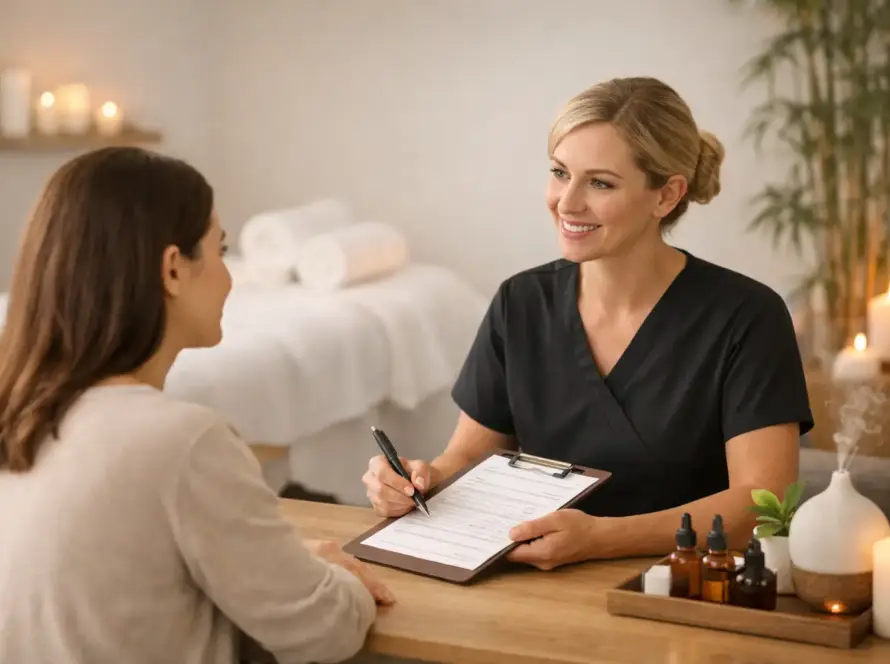
The right massage can feel like a rare pause: warm, calming, unhurried and entirely centred on your comfort. But when you are looking for a more private, sensual or affirming experience, choosing who to trust can feel more personal than simply picking a time slot. Asking the best questions before booking a massage gives you permission to be clear about what you need, without embarrassment or apology.
A professional therapist should welcome sensible questions. In fact, a thoughtful conversation before your appointment is often the first sign that you are choosing a setting where you can relax, unwind and be yourself.
1. What kind of massage do you offer?
Massage means different things to different people. Some therapists focus on deep tissue work and sports recovery. Others offer a slower Swedish-style treatment designed for rest, while some combine flowing massage techniques with mindful, sensory touch.
Ask how the session feels in practice, not just what it is called. Is the pressure light, medium or firm? Is the pace calming and unhurried? Is the experience intended to ease muscular tension, support emotional relaxation, or both? There is no right answer, only the one that suits your body and state of mind.
For men who want a gentler, more nurturing experience, it can be reassuring to hear that softness and relaxation are taken seriously. You do not need to be injured, exhausted or visibly stressed to deserve caring touch.
2. Are your boundaries clear, and is the service non-sexual?
This is one of the most valuable questions you can ask, particularly when a massage is described as sensual or tantra-inspired. Sensual does not have to mean sexual. A professional service can create a deeply relaxing, body-positive atmosphere while maintaining clear, respectful boundaries at all times.
Ask directly what is and is not included. A trustworthy therapist will answer calmly and without making you feel foolish for checking. Clear limits protect everyone: they remove uncertainty, allow genuine relaxation and make it easier to stay present in the treatment.
At Blissful Serenity Massage Therapies, sessions are expressly non-sexual. The focus is on relaxation, sensory comfort, affirming touch and emotional well-being, never sexual services. That clarity is not a restriction on the experience. It is part of what makes it safe enough to let go.
3. Can I talk about my comfort levels before we begin?
You should be able to discuss practical and personal preferences before you arrive. Perhaps you are new to massage, unsure about being touched in certain areas, recovering from a difficult week, or simply nervous about meeting a therapist for the first time. These are all reasonable things to say.
Ask whether you can share preferences around pressure, conversation, music, temperature and areas to avoid. You may prefer quiet, or you may find a little friendly chat helps you settle. You might want an extra towel, a warmer room or time to adjust before the massage starts.
Your preferences can change during the session too. Consent is ongoing, not a one-off question at the door. You should feel comfortable saying “lighter please”, “could you avoid my shoulders today?” or “I need a moment” without any awkwardness.
4. What should I wear, and what are the draping arrangements?
For many men, this is the question they most want to ask but hesitate to raise. There is no need to guess. Professional massage arrangements should be explained clearly before your appointment, including what you may wear, how towels or sheets are used, and how privacy is protected while you change or reposition.
Some people are happiest remaining in underwear throughout. Others, including naturists, may feel more comfortable with less clothing. What matters is that the therapist explains the options, respects your choice and maintains appropriate coverage and boundaries.
If feminine presentation, lingerie or crossdressing is part of how you feel most like yourself, it is also fair to ask whether this can be accommodated respectfully. The answer may depend on the therapist’s service and practical arrangements, but asking should never invite judgement. A good experience begins with being welcomed as you are.
5. Is the setting private and discreet?
Privacy is not a luxury when you are booking a vulnerable, personal experience. It is part of your comfort. Ask whether the studio is private, whether there is a discreet entrance, and what happens if you choose a home or hotel visit instead.
If a therapist offers mobile massage, check how they prepare the space and what they bring. A professional will usually need sufficient room for a couch, clean linens and a calm environment. You may need to consider pets, housemates, interruptions, parking and whether the room is warm enough.
For a first visit, you might prefer a dedicated studio because it creates a clearer separation from daily life. On the other hand, being treated at home can be especially comforting if travel makes you anxious or you want to rest immediately afterwards. It depends on where you can feel most at ease.
6. What qualifications, experience and hygiene practices do you have?
You do not need to interrogate a therapist, but you are entitled to understand their professional approach. Ask about their training, experience and the massage styles they use. If you have a health condition, an injury or chronic pain, ask whether massage is appropriate and whether they have experience adapting treatments.
It is equally sensible to ask about cleanliness. Fresh towels and linens, clean hands, a tidy treatment space and suitable massage oils are basics, not extras. If you have allergies or skin sensitivities, mention them before booking so alternatives can be discussed.
Massage is supportive, but it is not a substitute for medical advice. If you have unexplained pain, a recent operation, a contagious skin condition, a blood-clotting concern or any serious medical issue, speak to an appropriate healthcare professional first. Being open protects your wellbeing and helps the therapist work responsibly.
7. How long is the appointment, really?
A “one-hour massage” can mean different things. In some places, that hour includes consultation, changing and payment. In others, it refers to a full 60 minutes of hands-on treatment. Ask what the booked time covers so you can arrive without feeling rushed or disappointed.
It is also helpful to ask how early to arrive and whether there is time afterwards to come round gently. A deeply calming massage can leave you feeling pleasantly quiet, sleepy or emotionally lighter. Giving yourself ten minutes before rushing back to a train, work call or busy street can make a real difference.
8. What is the total cost and cancellation policy?
Discretion includes financial clarity. Confirm the full price, how payment works, whether travel costs apply for mobile appointments and whether a deposit is needed. There should be no vague wording, surprise additions or pressure to book more than you want.
Ask about cancellation and rescheduling too. Life changes, trains run late and illness happens. A fair policy will be clear about notice periods while recognising that both client and therapist are making time available. Knowing the arrangements in advance lets you book with confidence.
9. Can I request a male therapist or a particular presentation?
For some men, the gender of the therapist is central to feeling comfortable. You may be gay, bisexual, bi-curious, straight, questioning or simply more relaxed receiving massage from another man. You do not have to justify that preference.
You may also be drawn to a therapist whose energy feels gentle, masculine, feminine or somewhere in between. If a service offers optional feminine presentation, including lingerie, ask what is available and how requests are discussed. Keep the conversation respectful and within the stated non-sexual boundaries. The purpose is to create comfort, affirmation and a sense of safety, not uncertainty.
10. Will I be judged if I am nervous or unsure?
This may be the quietest question, but often the one that matters most. Many people book massage while carrying stress, loneliness, body worries or uncertainty about what they enjoy. Men are often taught to dismiss those needs, especially when the need is for gentleness, closeness or permission to soften.
A good therapist will not expect you to perform confidence. You can be quiet. You can ask questions. You can change your mind about pressure or positioning. You can arrive feeling a little shy and leave feeling more settled in your own skin.
11. What happens if I need to stop or change the session?
You remain in control throughout. Before booking, ask how the therapist handles a request to pause, change direction or end early. The answer should be simple: your request is respected promptly and without annoyance.
This is particularly important if you are trying a sensual massage for the first time, exploring naturism, or stepping into a more feminine expression that feels exciting but vulnerable. A calm, professional response gives you room to discover what feels right at your own pace.
12. Do I feel reassured by the way they communicate?
Trust your response to the booking conversation. Are your questions answered clearly? Does the language feel respectful? Are boundaries stated without coldness, and is warmth offered without pressure? The right therapist will make the practical details feel straightforward while still recognising that booking may carry emotional weight.
A massage should not require you to become someone else first. Choose the practitioner who makes room for your comfort, your privacy and your humanity. When you feel genuinely welcomed without judgement, it becomes much easier to breathe out, settle in and receive the care you came for.