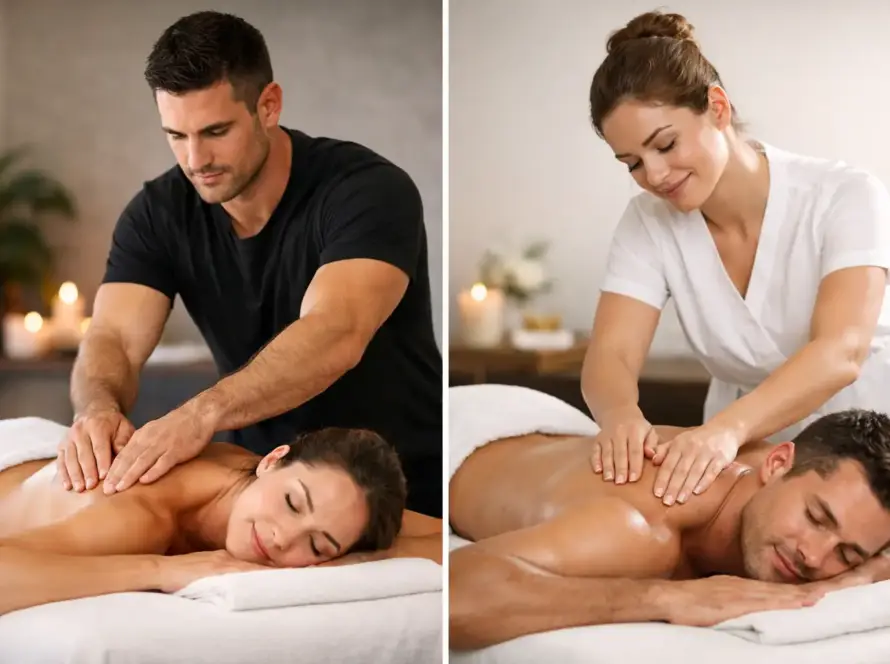
A busy mind rarely switches off just because you tell it to. You may still be answering messages in your head, carrying a difficult conversation in your shoulders, or feeling strangely distant from your own body. So, does massage reduce stress? For many people, yes: a calm, professional massage can help the body move out of a guarded, high-alert state and into one that feels quieter, heavier and more at ease.
That does not mean massage makes every source of stress disappear. It cannot resolve a demanding job, grief, money worries or relationship uncertainty. What it can offer is a protected pause: time in which you do not have to perform, explain yourself or hold everything together. For men who seldom receive affectionate, reassuring touch, that pause can be deeply meaningful.
Does massage reduce stress in the body?
Stress is not only a thought. It is a physical response. When you are under pressure, your nervous system may stay prepared for action. Your breathing can become shallow, your jaw may clench, and the muscles around your neck, back, hips or legs can remain tense long after the stressful moment has passed.
Massage works with that physical side of stress. Slow, considered touch, a comfortably warm room and the simple permission to lie down can encourage slower breathing and soften muscle guarding. Many clients notice that their thoughts become less urgent as their body begins to feel safer. Some drift into a light sleep; others remain awake but feel pleasantly grounded.
Research on massage and relaxation suggests it can support lower perceived stress and improved mood, particularly when it is part of a regular self-care routine. The experience is not identical for everyone, though. The pressure, pace, environment and your relationship with touch all matter. A massage that is too firm, rushed or impersonal may leave you feeling more tense rather than less.
Why respectful touch can feel so restorative
Human beings need safe contact, yet many men are taught to minimise that need. They may offer touch only through sport, sex, a quick handshake or practical care. Asking for softness, comfort or nurturing attention can feel unusually vulnerable, even when the desire is completely natural.
A good massage creates clear conditions for receiving touch without having to earn it or turn it into anything else. There is no need to be muscular, confident, conventionally masculine or in a particular mood. You can arrive tired, shy, chatty, quiet or unsure. You can simply be met where you are.
This is also why emotional safety matters as much as technique. When boundaries are respected, consent is checked and there is no judgement about your body or self-expression, the nervous system has more reason to settle. For some men, especially those who have felt overlooked or guarded in other wellness spaces, being welcomed without judgement is part of the relief.
Sensual massage can have a place here too, when it is offered professionally and with explicit boundaries. Sensual does not have to mean sexual. It can mean a slower, more attentive style of massage that values warmth, comfort, skin-to-skin awareness where agreed, and a feeling of being cared for. At Blissful Serenity Massage Therapies, every session is strictly non-sexual, with discretion, consent and personal comfort kept at the centre.
The stress relief is often more than muscle deep
People often book a massage because their shoulders ache or their lower back feels tight. They may leave noticing those changes, but describe something broader: a clearer head, a softer mood, a sense of having returned to themselves.
There are several reasons for this. Being still for an extended period interrupts the usual cycle of rushing and reacting. Steady touch gives your attention something simple to rest on. If you have been disconnected from your body, noticing warmth, pressure and breathing can bring you back into the present without demanding that you meditate perfectly or find the right words.
Massage may also make emotions more noticeable. A client can feel calm, relieved or unexpectedly tearful afterwards. This is not a sign that anything has gone wrong. When the body stops bracing, feelings that have been held at a distance can sometimes surface. A professional therapist will allow space for that response without making assumptions or pushing you to disclose more than you wish.
What makes a massage genuinely calming?
The setting matters. A stressful journey, a cold room or uncertainty about what is expected can undermine the benefits of even the best massage. Before booking, it helps to choose a therapist who explains the service clearly, welcomes questions and makes their professional boundaries easy to understand.
Communication matters just as much. You should be able to say whether you prefer light, medium or firmer pressure; whether you want quiet or gentle conversation; and which areas you would rather avoid. Consent is ongoing, not a one-off question at the start. You can change your mind during a session, ask for an adjustment or keep your clothing on if that feels right for you.
For clients who enjoy naturism, lingerie, crossdressing or a more feminine atmosphere, clarity can be especially reassuring. You deserve a space where your preferences can be discussed respectfully, without embarrassment or assumption. The right experience should feel affirming rather than exposing. Your privacy is not an optional extra – it is part of what allows you to relax.
How to get more from a stress-relief massage
Try not to schedule your massage as another item to race through. If possible, allow a little time either side of the appointment. Arriving a few minutes early can help your body settle before the massage even begins, while a quieter evening afterwards lets the relaxed feeling last longer.
Be honest about what you need. You do not need a polished explanation. Saying, “I have had a difficult week and would like a slow, calming session,” is enough. Equally, if you would prefer not to talk about your stress at all, that is completely valid. A massage is not counselling, although it can be a welcome complement to other forms of support.
Drink water if you are thirsty, eat something light beforehand if needed, and avoid planning anything demanding immediately afterwards. The aim is not to follow rules perfectly. It is to treat the appointment as time that belongs to you, rather than another obligation to manage.
Regular sessions may be more helpful than saving massage only for the point of burnout. A monthly appointment can become a useful check-in with your body, while some people prefer occasional sessions around travel, work deadlines, social events or emotionally demanding periods. What is sustainable will depend on your budget, schedule and needs.
When massage is not enough on its own
Massage can support wellbeing, but it is not a replacement for medical or mental health care. If anxiety, low mood, panic, insomnia or stress is affecting your ability to work, sleep, eat or feel safe, speaking with a GP or qualified mental health professional is a strong and sensible next step. There is no shame in needing more support.
It is also wise to tell a therapist about relevant health conditions, recent injuries, skin concerns, circulation problems or medication. Some situations call for adapted pressure, avoiding certain areas or waiting until you have medical advice. A professional therapist will welcome that information and work within safe limits.
The most useful question may not be whether massage removes every stressor. It is whether an hour of respectful, attentive care helps you feel more comfortable in your body and better able to meet what comes next. When the answer is yes, that quiet sense of relief is worth making room for.